Wallpapering
Paper hung on walls that have been prepared for it, with the pattern planned before the first drop.
About Wallpapering
The short answer
RS Spray Decor hangs wallpaper across Surrey and south-west London, from paste-the-wall vinyls to pattern-matched designs and feature walls. Walls are prepared and lined where the plaster needs it, and the pattern repeat and drop are planned before the first length goes up so seams and corners line through. Free, no-obligation quotes.
Wallpaper only ever looks as good as the wall underneath it. Period properties in particular usually need lining first to even out old plaster, so the finished paper sits flat instead of showing every dip and crack behind it.
Pattern matching is a planning exercise before it is a hanging one. Repeat, drop length and corner runs are worked out first so large or busy patterns line through cleanly rather than being fudged at the awkward corner.
Modern paste-the-wall vinyls and traditional paste-the-paper designs are both handled, with the adhesive and technique chosen for the specific product rather than one method used on everything.
What it covers
- Feature walls and full rooms
- Pattern-matched papers with a long repeat
- Paste-the-wall and traditional paste-the-paper products
- Lining paper over uneven or previously papered walls
- Murals and panel-set designs
What it suits
- Period rooms where the plaster is sound but far from flat
- Walls stripped back from previous paper that need making good first
- Newly plastered walls that need sizing before anything is hung
- Rooms where paper is going up alongside painted joinery finished at the same time
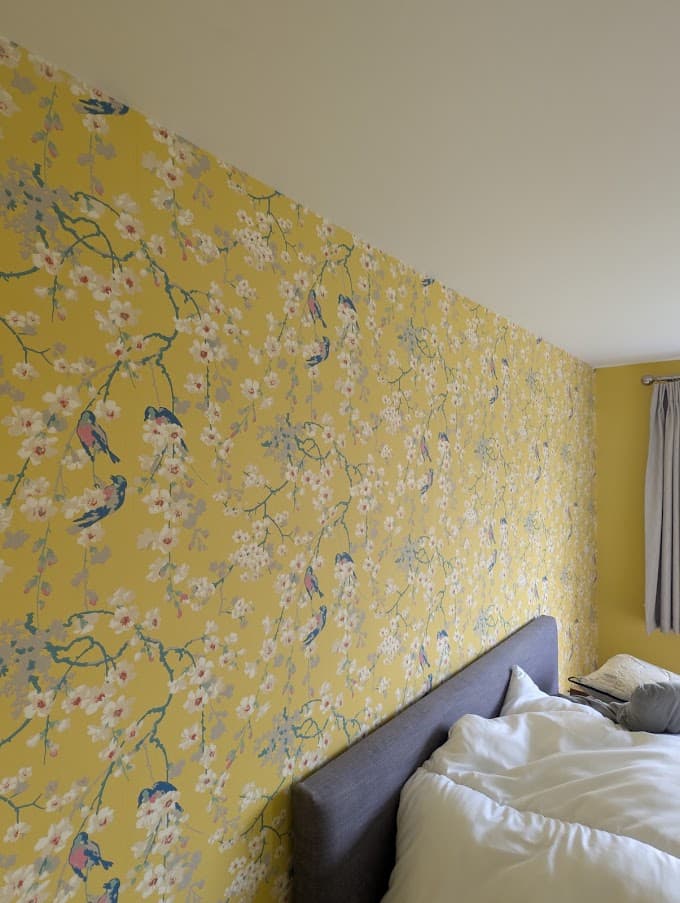
Paper rather than paint - where the wall underneath and the pattern repeat decide the result.
Before any finish goes on
- 01
Old paper comes off properly. Hanging over the top of it is how bubbles and lifting seams start.
- 02
Walls are filled, sanded and made good, then sized so the paper slides into position instead of grabbing.
- 03
Lining paper goes on first where the wall needs it - most older properties do, and it is the difference between a flat result and one that shows every dip.
- 04
The repeat, drop length and corner runs are measured and planned before cutting, so the pattern lands where it should.
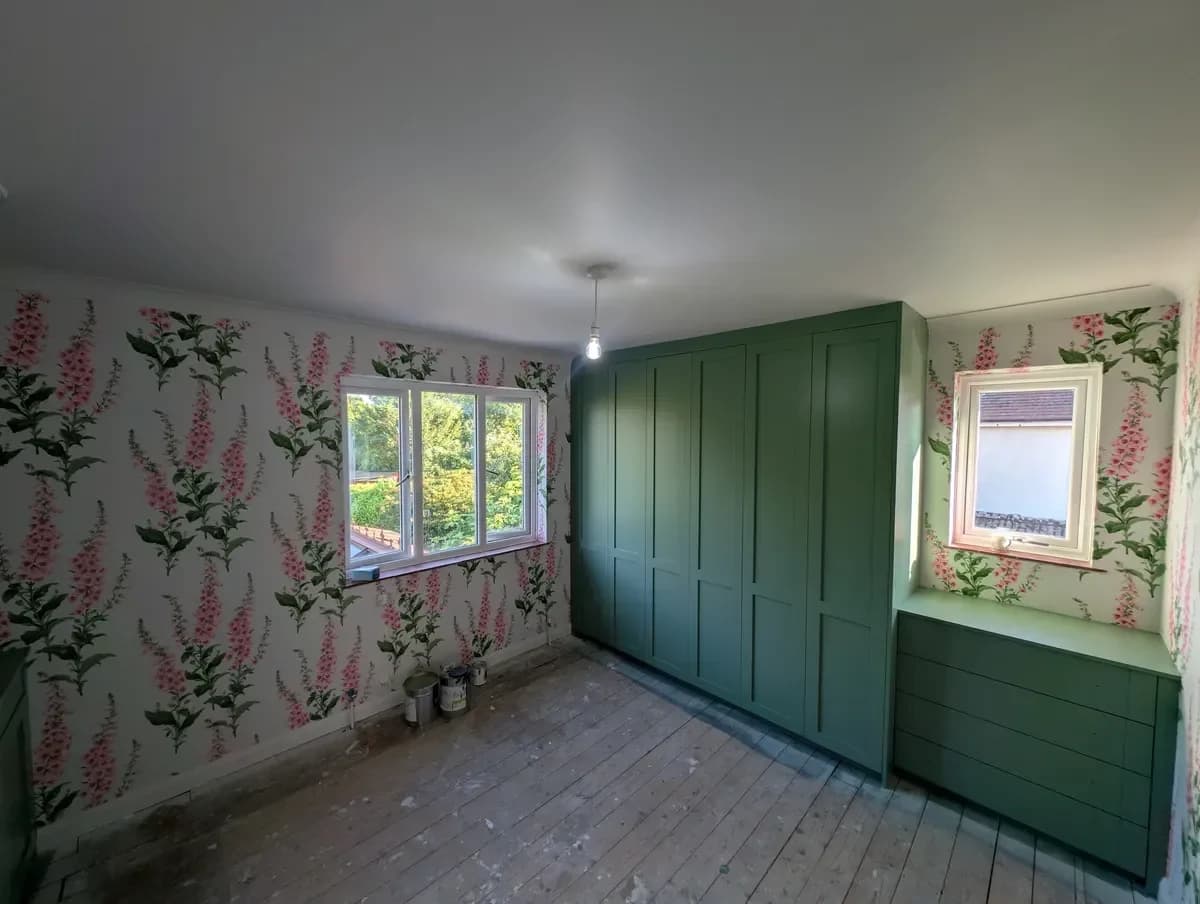
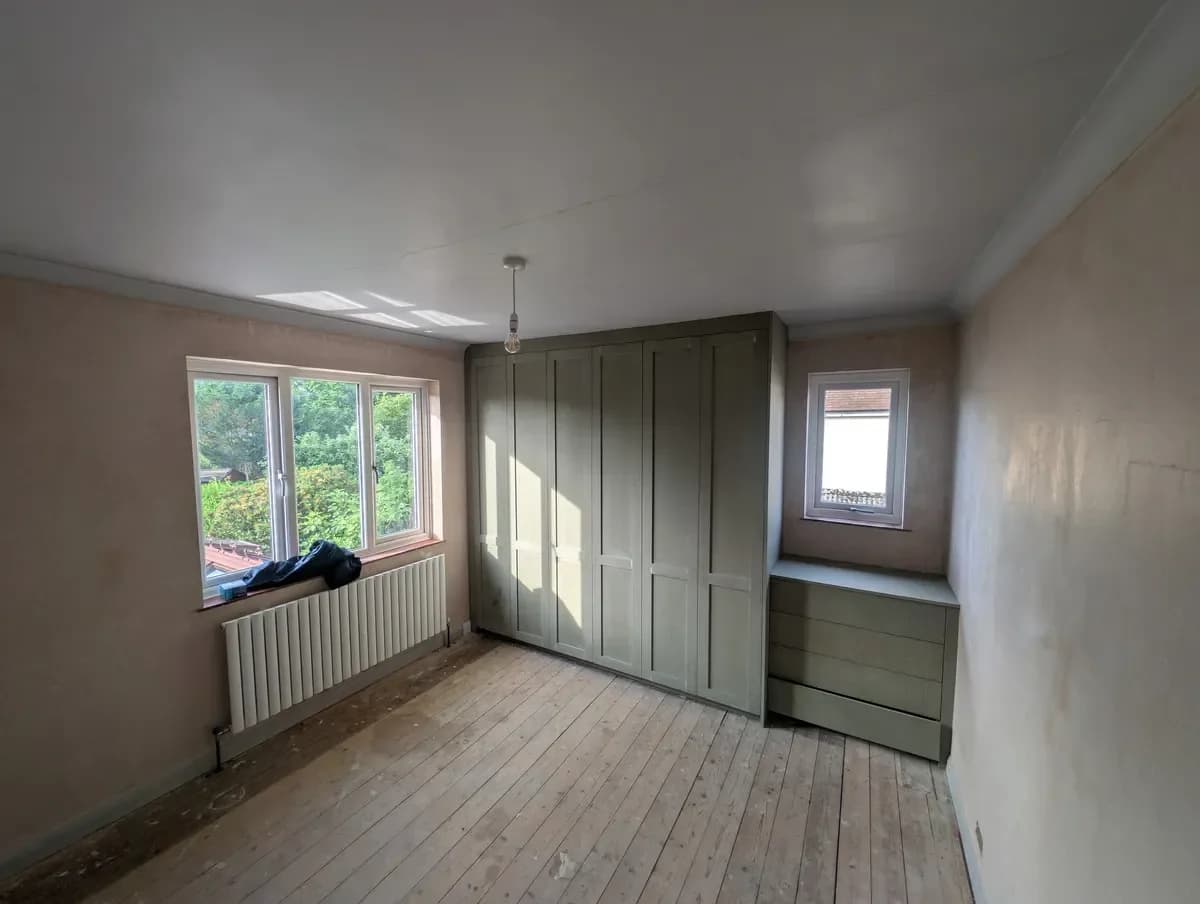
The same room, before and after
How a wallpapering job runs
- 01
See the walls and the paper
Condition of the plaster, and the specific product going on it. Both change the approach.
- 02
Quote with quantities
Including how many rolls the repeat actually needs, so you are not two short on the last wall.
- 03
Strip, make good, line
Old paper off, walls filled and sized, lining paper hung where the surface needs it.
- 04
Plan the pattern
Repeat, drop and corner runs set out before a single length is cut.
- 05
Hang and check the seams
Hung, rolled and checked along every seam under a raking light before the room is cleared.
What you get to choose
- Adhesive chosen for the specific paper rather than one paste used on everything
- Lining paper specified by weight to suit the wall underneath it
- Advice on quantities before you order, including the extra a long repeat needs
- Kitchen, Cabinet and Joinery ResprayingThe specialist service: spraying existing cabinetry and joinery so it looks renewed without being replaced.
- Professional DecoratingRoom-by-room interior work, where the preparation and the woodwork matter as much as the wall colour.
- Interior and Exterior PaintingProperty-scale painting, and the outside of the building - where the substrate and the weather set the rules.
- uPVC SprayingThe uPVC-specific service: colour and finish rather than replacement, on a substrate that needs its own preparation and coatings.
- Commercial DecoratingWork in premises that have to keep functioning, where sequencing matters as much as the finish.
Wallpapering across Surrey and south-west London
Every town below has its own wallpapering page with local detail.
- Guildford
- Weybridge
- Kingston upon Thames
- Staines-upon-Thames
- Twickenham
- Cobham
- Windsor
- Ashford
- Esher
- Walton-on-Thames
- Woking
- Leatherhead
- Epsom
- Sunbury-on-Thames
- Feltham
- Chertsey
- Virginia Water
- East Molesey
- Hersham
- Byfleet
Wallpapering questions
Do you hang paste-the-wall and traditional papers?
Both. Paste-the-wall vinyls and traditional paste-the-paper designs need different handling and different adhesives, and the technique follows the specific product rather than one method being used on everything.
Why does old plaster need lining paper first?
Because wallpaper only ever looks as flat as the wall behind it. Older plaster is rarely truly flat, and a thin or shiny paper hung straight onto it picks up every dip and hollow in side light. Lining paper evens the surface out and gives the finish paper a consistent, absorbent base to grip. On period walls it is a normal step, not an upsell.
How do you make the pattern line up across seams and corners?
It is planned before anything is cut. The repeat, the drop length and where the runs land in each corner are worked out first, so a large or busy pattern lines through cleanly instead of being fudged at the awkward corner. Rooms are rarely square, so deciding where the inevitable break goes is part of the job.
How many rolls do I need?
More than the figure on the box suggests if the paper has a long repeat, because each drop has to be cut to land the pattern in the right place and the offcuts add up. Quantities are calculated from your actual wall measurements and the repeat as part of the quote, so you are not two rolls short on the last wall with a discontinued batch.
Do you strip the old paper first?
Yes. Hanging new paper over old is how bubbles, lifting seams and telegraphed joins start, because the new adhesive re-wets what is underneath. Old paper comes off, the wall is made good, and it starts from a proper surface.
What happens on a newly plastered wall?
It has to be fully dry first, then sized. Sizing seals the porous surface so the paper slides into position for trimming instead of grabbing the moment it touches the wall, and so it can be repositioned to line the pattern up.
Can wallpaper go on a damp wall?
No. Paper will not hold on a damp wall, and the adhesive stays soft behind it. The cause has to be found and fixed first, otherwise the paper lifts, the seams open and the money is wasted.
Will the seams lift or bubble later?
Not where the wall was prepared and lined properly and the adhesive suited the paper. Lifting seams almost always trace back to one of three things: paper hung over old paper, a wall that was not sized, or a general-purpose paste used on a product that needed something else.
Can you paper a feature wall only?
Yes, that is a common request. It is quoted the same way as a full room, based on the wall area, the condition of the wall and how much planning the pattern needs.
Do you hang murals and panel sets?
Yes. Murals and panel sets are numbered and have to go up in sequence with the wall set out beforehand, since there is no second chance to shuffle a panel along once it is on.
Are some papers harder to hang than others?
Yes, and it is worth knowing before you buy. Heavily embossed papers and some very lightweight ones stretch as they are pasted and hung, and once a length has stretched, that seam will always show slightly. Thin papers also let any dark patch on the wall behind read through.
Can I supply my own wallpaper?
Yes, and most people do. Send the product details before ordering and you will get the roll quantity and any handling notes for that specific paper, so the order is right first time.
How long does a room take to paper?
Longer than painting the same room, generally. Stripping, making good, lining and letting the lining dry all come before a single length of finish paper goes up, and a long repeat adds cutting and planning time on top.
Can papering and painting be done in the same visit?
Yes. Where paper is going up alongside painted woodwork or a painted ceiling, the sequence is planned so wet edges and freshly hung paper are never fighting each other, and the room is finished as one piece of work.
Get a free wallpapering quote
Tell us what the job is. If photos are easier than words, WhatsApp them over - for kitchens and cabinet work that is usually the fastest route to a sensible number.
What happens next
- 01Richie reads it himself - there is no call centre in between.
- 02You get a reply the same or next working day, by whichever method you asked for.
- 03If photos or a look in person are needed to quote properly, we will say so rather than guess.
Covering Surrey and south-west London, from Ashford, Surrey.